In high-temperature environments, reliable, high-performance imaging is essential across industries such as manufacturing, scientific research, and aerospace operations. KAYA Vision’ Iron camera series meets these unique demands, with many designs capable of withstanding temperatures up to 80°C, providing long-lasting durability and exceptional imaging quality even under extreme heat.
Advantages of High-Temperature Cameras Over Standard Models
Standard industrial cameras frequently degrade in image quality and reliability in high-heat environments due to thermal noise and material instability. In contrast, KAYA’s Iron series is engineered with advanced heat-resistant components, capable of operating from -40°C to 80°C and tolerating storage conditions up to 85°C. Due to low power consumption and housing optimized for built-in passive cooling, these cameras minimize internal heat generation, preventing overheating and allow for sustained operation without failure. This level of efficiency makes the Iron series an ideal choice for demanding, high-temperature applications where consistent functionality is paramount.
Applications of High-Temperature Cameras
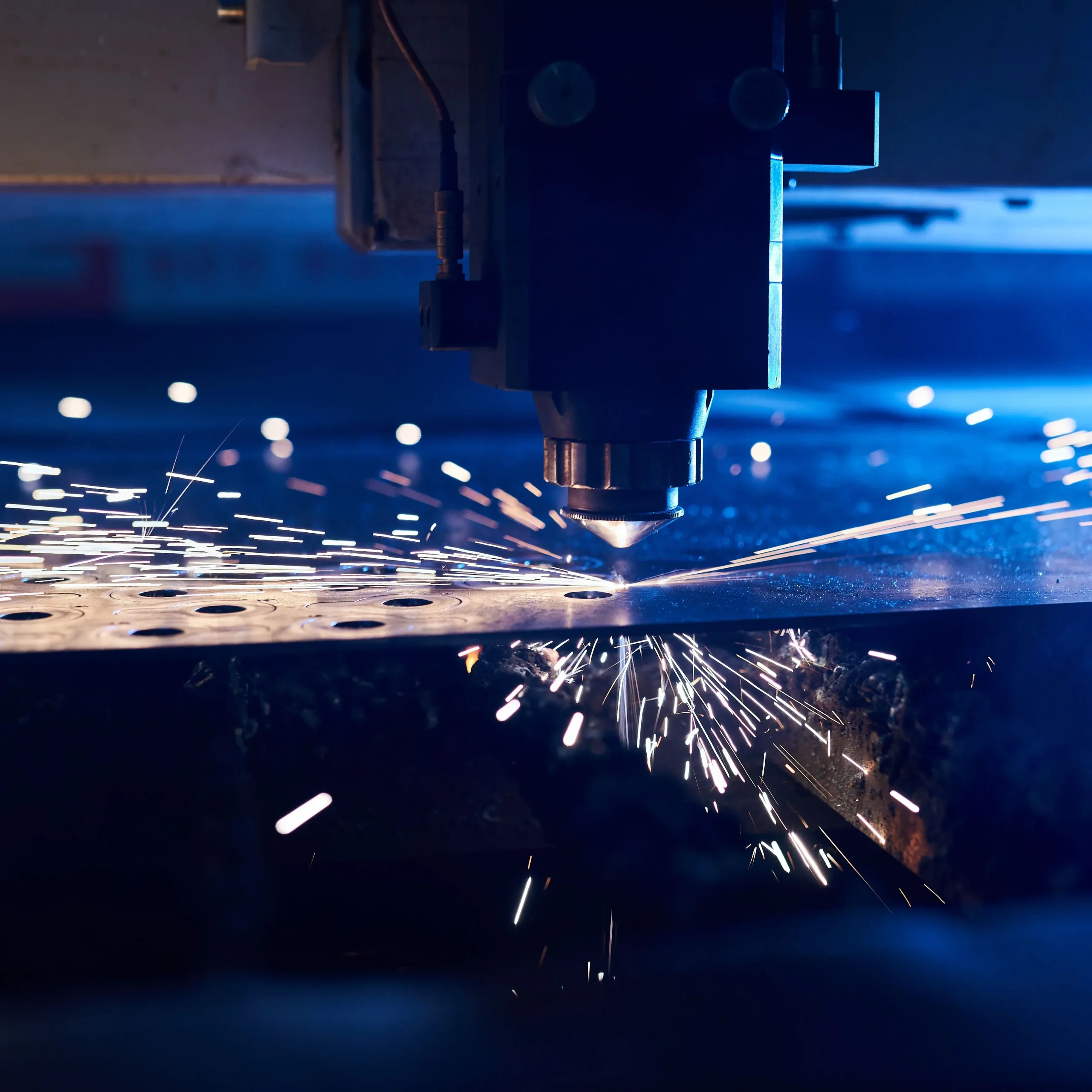
High-temperature cameras are critical tools in industries where temperature control and real-time monitoring are key to product quality and efficiency. KAYA’s Iron series enables operators to capture high-speed, high-resolution images, ensuring precise observation and control in high-heat environments.
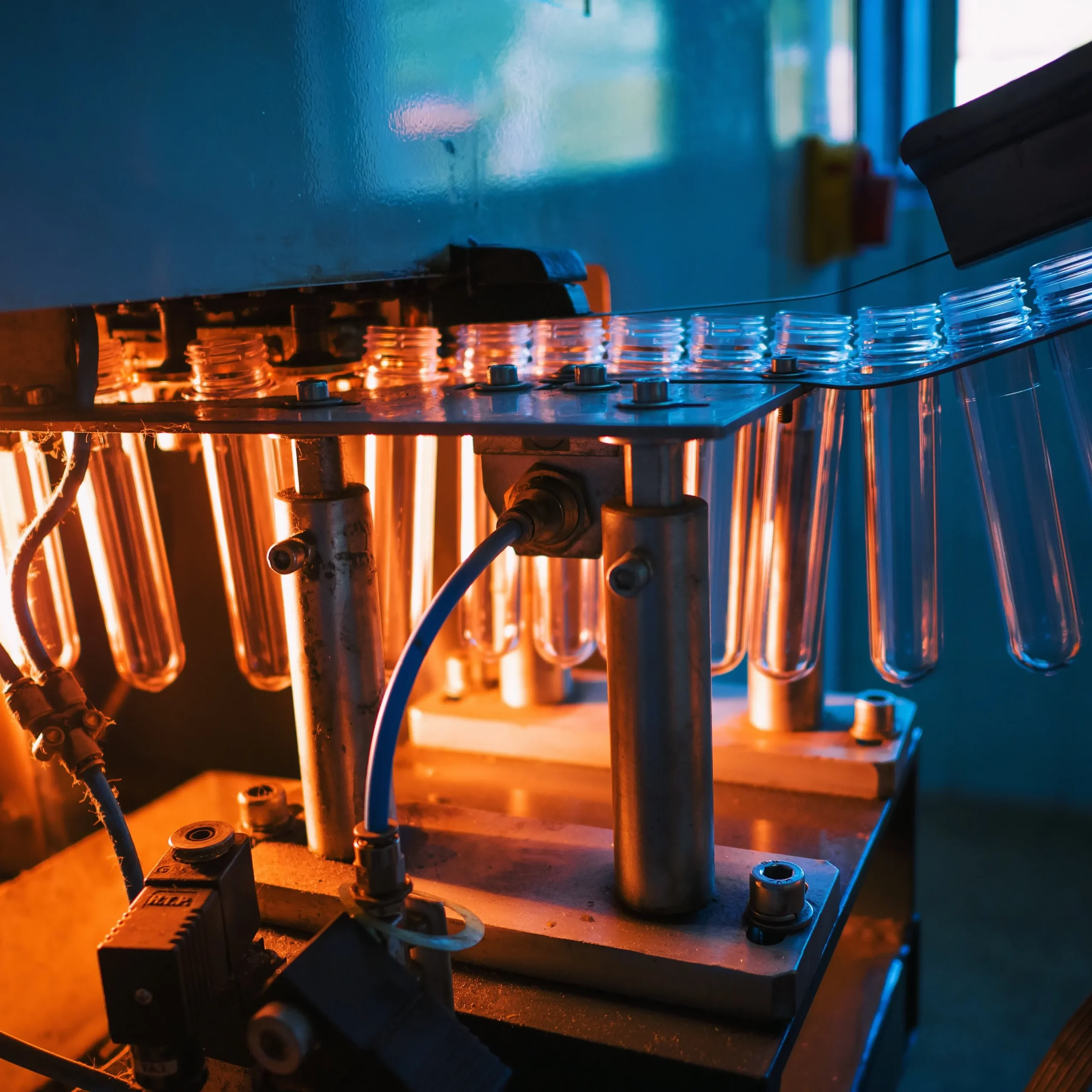
In metal forging, continuous monitoring of furnace temperatures is vital for achieving specific material properties. With frame rates of up to 513 fps at 8-bit resolution, the Iron cameras enable real-time imaging, supporting quality control, operational safety, and reducing production defects. Similarly, in glass manufacturing, the cameras’ high dynamic range (up to 70dB) allows operators to monitor cooling rates and detect any imperfections, ensuring flawless product output.
In combustion and materials science research, high-temperature cameras are indispensable for capturing high-resolution, real-time imaging of rapid thermal processes. For example, in combustion studies, the Iron cameras’ sensitivity- achieving quantum efficiency up to 72% – allows detailed analysis of flame dynamics, facilitating advancements in fuel efficiency and environmental technologies. Cameras for high temperatures can also assist in studying the structural integrity of new materials under heat stress, providing insights essential for material innovation.
The aerospace industry also relies on high-temperature cameras to monitor critical systems during high-heat phases, such as engine testing and rocket launches. Iron cameras provide clear, high-speed footage of propulsion systems and other components under extreme heat, enabling engineers to assess performance and make necessary adjustments. During rocket launches, for example, these cameras capture detailed imaging of engine conditions, allowing for real-time analysis and rapid intervention if irregularities are detected. In space exploration, Iron cameras play a key role in thermal inspections of spacecraft, ensuring the equipment can safely withstand the temperature extremes encountered beyond Earth’s atmosphere.
Addressing High-Temperature Challenges
High-temperature environments introduce unique challenges, such as thermal noise, overheating, and thermal expansion, which standard cameras cannot handle effectively. KAYA’s Iron series cameras are designed to perform under temperatures up to and exceeding 80°C, with specific engineering solutions that ensure consistent performance in the most demanding environments.
Thermal noise, which can introduce artifacts and reduce image clarity, is minimized in the Iron series, which feature high-sensitivity sensors with optimized pixel sizes (as small as 2.5 μm x 2.5 μm). This maintains image quality even under intense heat, ensuring clear, artifact-free imaging. To quantify the efficacy of a camera in eliminating noise, signal to noise ratio (SNR) is used – this measurement takes a ratio of the power of a desired signal to the power of the noise present. Higher SNR values are less noisy, and are optimal for applications such as low light imaging and detailed astronomical observation. KAYA’s Iron cameras are equipped with a high SNR, with models such as the Iron 0505 boasting a 38.1dB max SNR.
Thermal expansion, a common issue in high-heat environments, can misalign components and impact imaging accuracy. Iron cameras counteract this with a durable construction and materials that resist thermal degradation. One measurement of camera reliability is Mean Time Before Failure (MTBF). The MTBF is a representation of the average time a device operates before its failure. In extreme temperatures, maintaining a good MTBF is critical. For every 10°C increase in operating temperature, the failure rate of a device typically doubles, significantly shortening its lifespan. At 50°C, KAYA’s Iron 0505 has a MTBF of 2,100,000 hours, making it an optimal choice for harsh and high temperature environments. Optional ingress protection (up to IP67) further protects the cameras from environmental factors, ensuring stable alignment and precise imaging, even under extreme stress. The global shutter technology provides distortion-free imaging, and with a dynamic range surpassing 70 dB, the cameras capture intricate details even under high-light intensity.
Compact Cameras for High Temperature
In many industries, small size must be traded for heat resistant cameras. Implementation of a heatsink can prevent overhearing by transferring the thermal energy generated by a camera’s internal electronics—specifically the sensor and processor—into the surrounding air. However, heatsinks can add significant footprint, taking up space or preventing proper mounting in applications requiring small area access, such as mounted cameras in robotics, aerospace, or welding. A camera’s necessity for a heatsink is primarily dictated by its power efficiency and surface area-to-mass ratio. In high-performance imaging, devices that utilize low-power components and advanced circuit design generate less “waste heat” during data transmission and image processing. When a camera is engineered for high thermal stability, it can dissipate heat effectively through its own chassis, eliminating the need for bulky external cooling fins and allowing the device to remain compact without risking sensor noise or hardware failure.
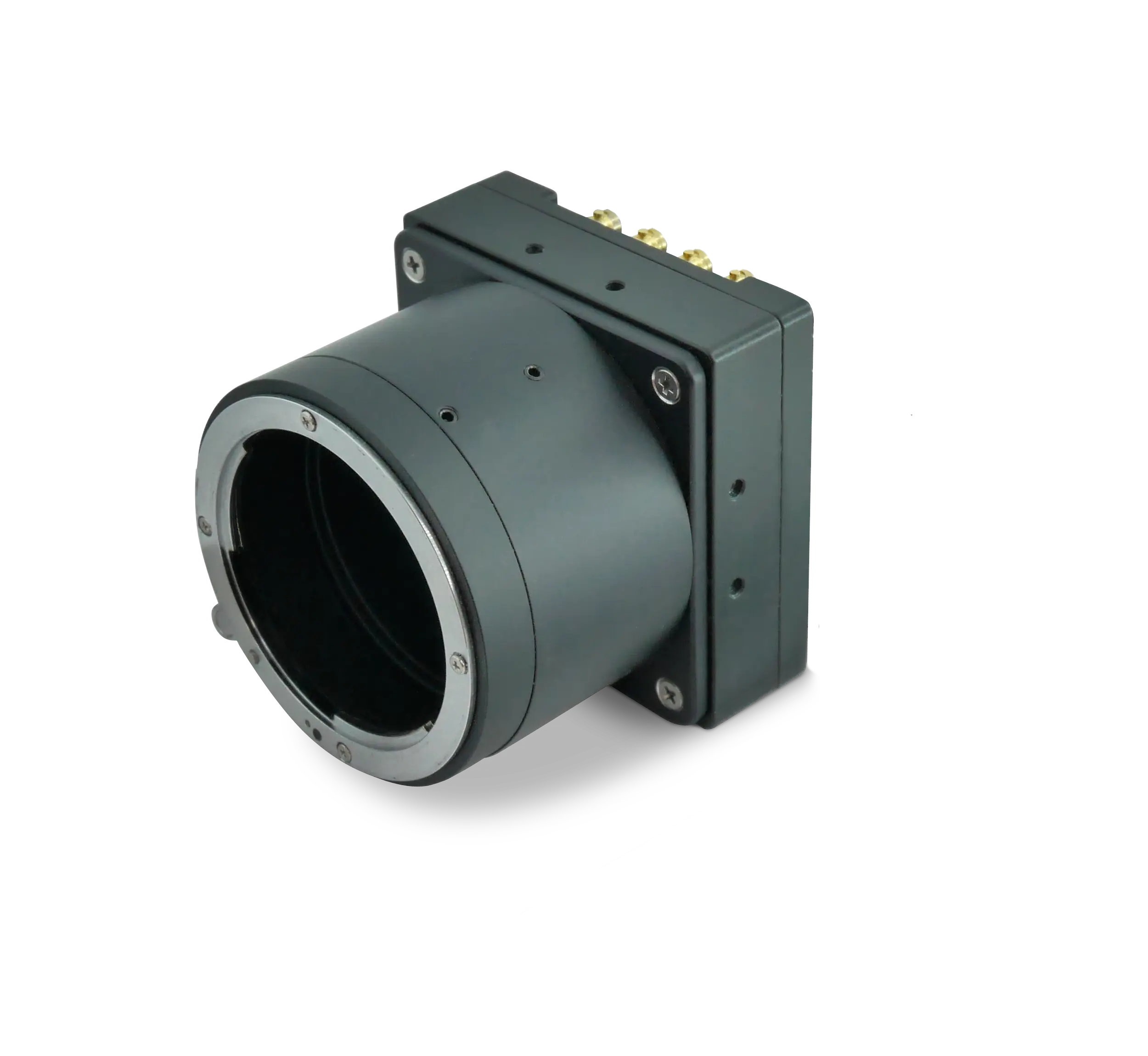
The KAYA Iron 0505 is the gold standard for high-temperature, small form factor operations, engineered to maintain a native operating range of up to 80°C (Industrial Grade) without a large external heatsink. This provides a massive spatial advantage over competitors, as the Iron 0505 dissipates heat efficiently through its ruggedized chassis. Its thermal design prevents the need for the large cooling fins that typically double a camera’s footprint. By maintaining a fixed 44x44x39 mm profile, the Iron 0505 remains the ideal choice for tight, unventilated enclosures in aerospace, defense, and robotics where traditional cameras would require excessive spatial overhead for thermal management.
Learn more about how the Iron series built-in heat dissipation compares to other industry leaders here.
Optimized Imaging for Extreme Heat
In high-temperature applications, maintaining high image quality is critical for effective monitoring and data collection. KAYA’s Iron cameras integrate advanced sensor technology, high dynamic range, and low-light capabilities to ensure clear, detailed imaging even in environments with fluctuating light and heat. The Iron series adheres to rigorous certifications and standards, providing durability and reliability across diverse applications. By addressing common challenges like thermal noise, overheating, and thermal expansion with innovative engineering, KAYA’s Iron cameras deliver the clear, precise imaging that high-temperature environments demand, supporting professionals in industries where performance and resilience are essential.