KAYA Vision · Iron Series CoaXPress Cameras

NIR Cameras: High sensitivity cameras compared

Three cameras from the KAYA Iron CoaXPress family, each optimised for a different imaging priority: frame rate, light sensitivity, or spatial resolution. The comparison below outlines how their sensors differ and the applications each is best suited to.

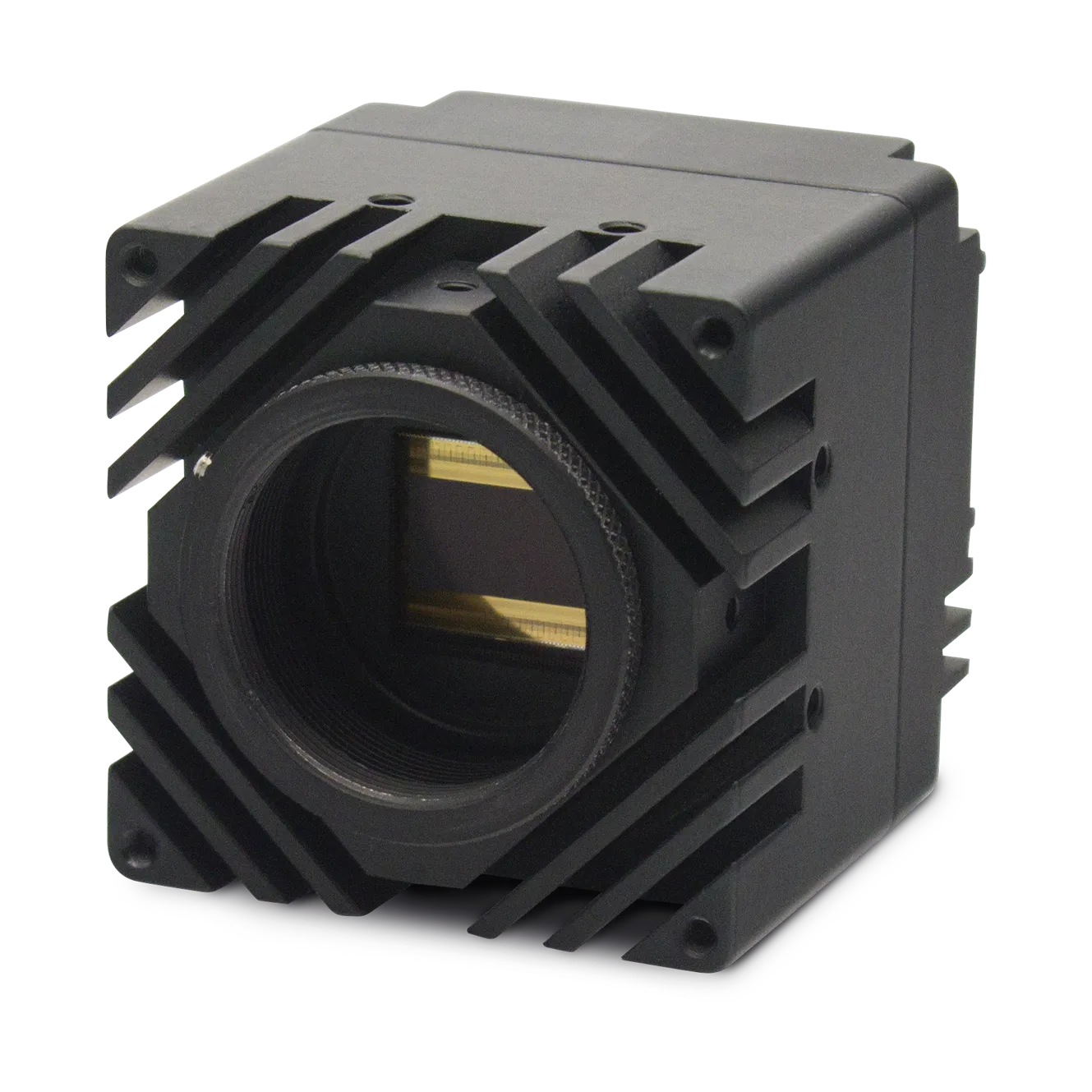
KAYA Iron 5514 BSI CoaXPress camera

Frame rate

Iron 5514 BSI

High-speed 14.2 MP BSI imaging

~1300 fps at 1920×1080 ROI — 275 fps at full 14.2 MP
  • Resolution 14.2 MP (4608×3072)
  • Pixel size 5.5 µm
  • Shutter Global
  • Sensor GSPRINT5514BSI
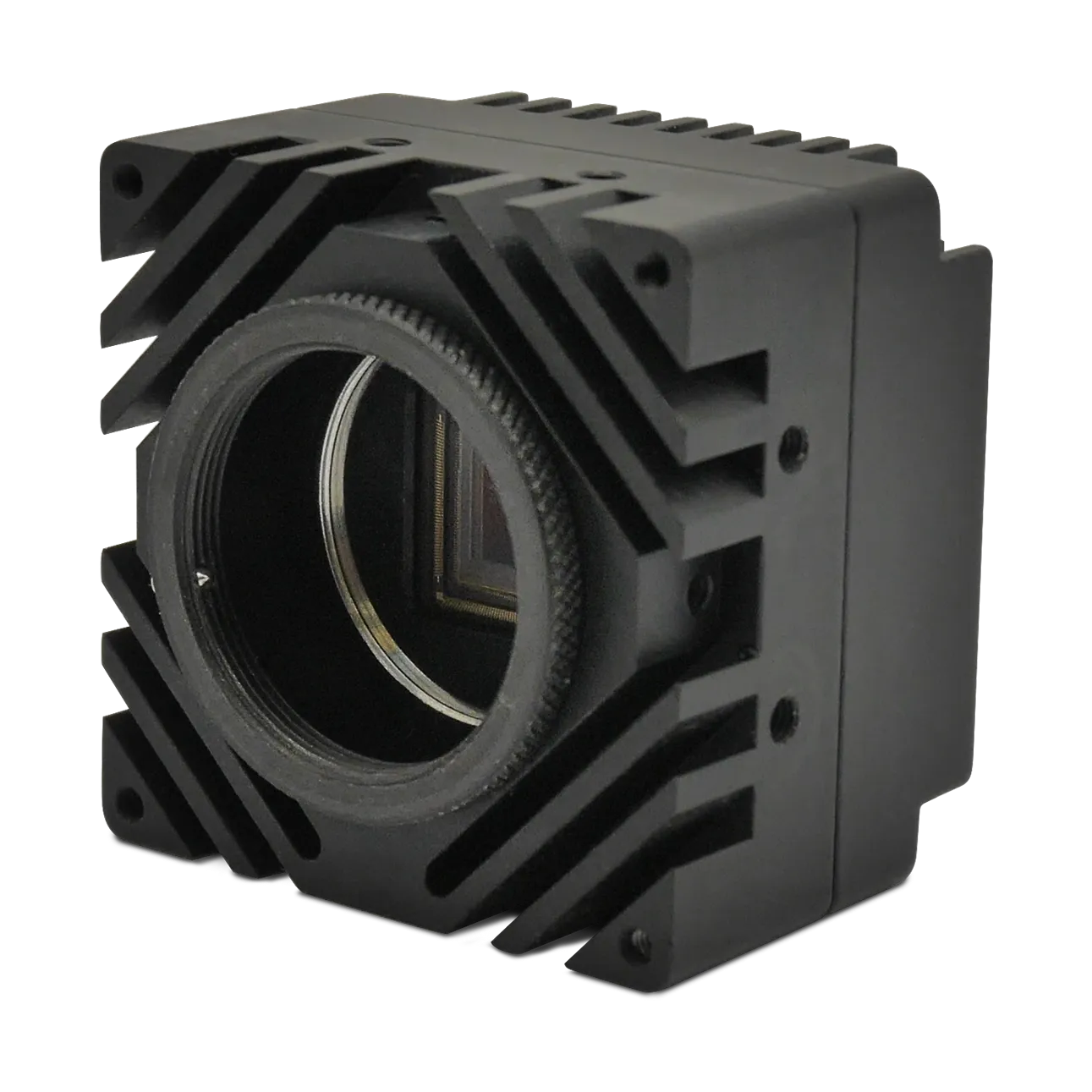
KAYA Iron 2020 BSI CoaXPress camera

Light sensitivity

Iron 2020 BSI

High-sensitivity, high-dynamic-range 4 MP

88 dB HDR 16-bit HDR output (dual ADC) · QE approaching 95%
  • Resolution 4 MP (2048×2048)
  • Pixel size 6.5 µm
  • Output 16-bit HDR / 24-bit RAW
  • Sensor GSENSE2020BSI
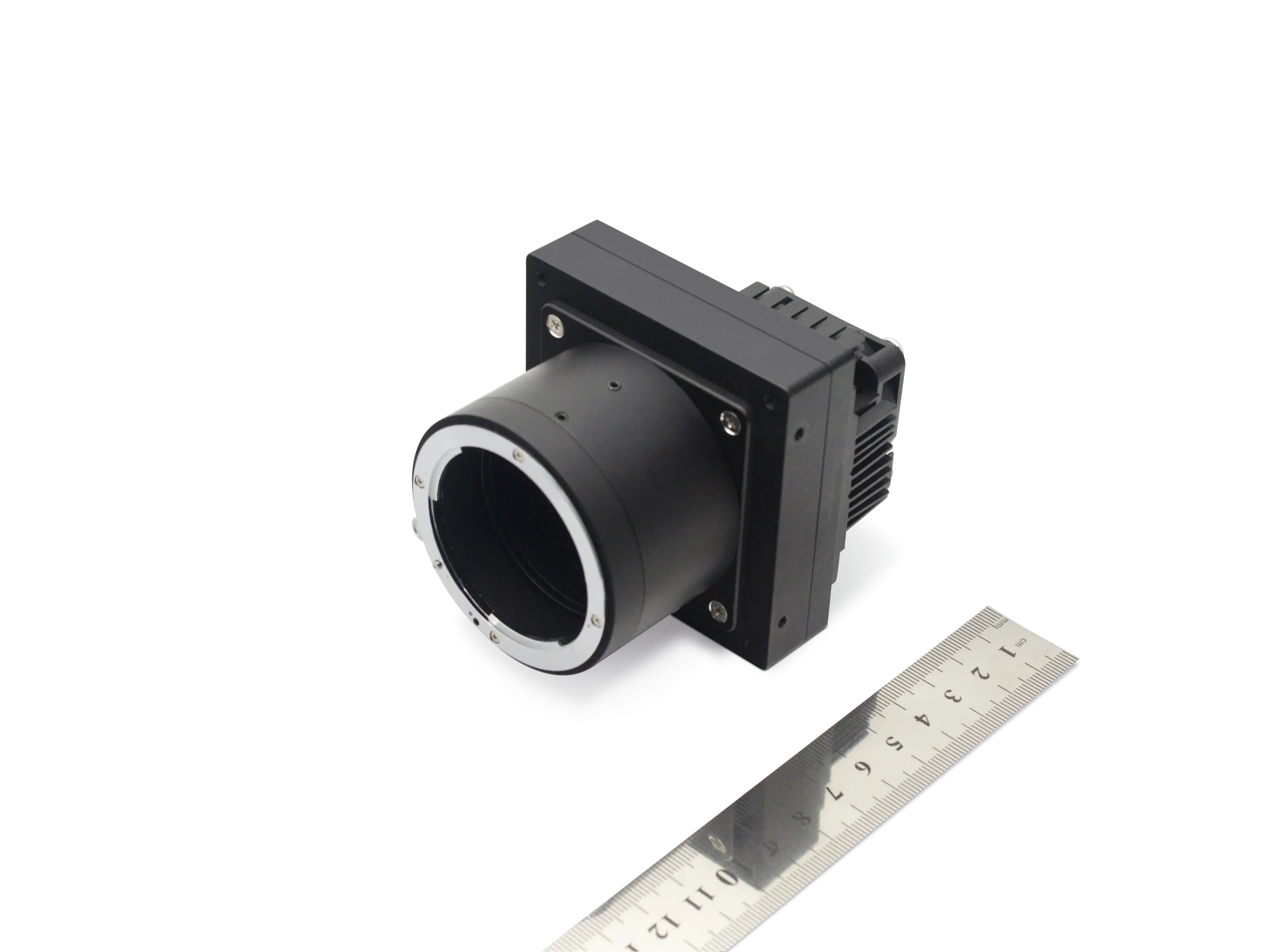
KAYA Iron 0505 NIR CoaXPress camera

Resolution & NIR

Iron 0505 NIR

26.2 MP at 150 fps, NIR-enhanced

26.2 MP 5120×5120 at up to 150 fps · global shutter, NIR-enhanced
  • Resolution 26.2 MP (5120×5120)
  • Max frame rate 150 fps
  • Shutter Global
  • Sensor GMAX0505RF
Silicon wafer of the kind inspected with high-resolution machine vision cameras

Applications

Built for industrial and scientific imaging

The Iron series is used across semiconductor and electronics inspection, scientific microscopy, astronomy and high-speed industrial vision. Each model pairs the same rugged CoaXPress platform with a sensor selected for the demands of the task, whether that priority is throughput, sensitivity or fine detail.

Silicon wafer photograph — Wikimedia Commons, CC BY-SA 3.0 (Peellden).

Technical Comparison

Specifications, side by side

All three cameras share the same compact KAYA Iron platform and CoaXPress interface; the sensor is what sets them apart. Highlighted cells indicate the leading specification in each row.

Specification
Iron 5514 BSISpeed
Iron 2020 BSISensitivity
Iron 0505 NIRResolution / NIR
Sensor
Gpixel GSPRINT5514BSI (BSI CMOS)
Gpixel GSENSE2020BSI (BSI CMOS)
Gpixel GMAX0505RF (Red Fox)
Resolution
14.2 MP · 4608×3072
4 MP · 2048×2048
26.2 MP · 5120×5120
Max frame rate (full res)
275 fps @ 10-bit
74 fps @ 11-bit
150 fps @ 8-bit
ROI / windowing
~1300 fps at 1920×1080
Windowing supported
Windowing supported
Pixel size
5.5 µm
6.5 µm
2.5 µm
Quantum efficiency
>85% @ 520 nm
~95% @ 550 nm
>65.5% @ 520 nm
Dynamic range
>77.5 dB
88 dB
>65 dB
Output bit depth
10 / 12-bit
16-bit HDR / 24-bit RAW
8 / 10-bit
Shutter
Global
Rolling (global reset)
Global
Color / mono
Mono or UV-enhanced color
Monochrome
Mono · NIR/IR enhanced
Sensor format
1.2" (30.5 mm diag.)
1.2" (13.3×13.3 mm)
1.1" (18.1 mm diag.)
Interface
CoaXPress v2.1 (CXP-12, up to 4 links)
CoaXPress v2.0 (up to 12.5 Gbps)
CoaXPress v2.1 (up to 50 Gbps)
Lens mount
F, M42, EF, Active EF/RF
C, CS, EF, DC auto-iris
C-mount
Power
Up to 11 W
Up to 4 W
<11 W @ 24 V
Dimensions
75 × 75 × 44.4 mm
44 × 44 × 46 mm
44 × 44 × 39 mm
Best for
High-speed motion & inspection
Low light, fluorescence, astronomy
Fine detail & NIR imaging

Frame rates shown at the bit depth noted; higher bit depths reduce fps. ROI/windowing trades field of view for speed — the 5514 reaches ~1234 fps at 2048×1080 and ~1300 fps at 1920×1080. Use the KAYA frame-rate calculator for exact figures at your resolution.

Model Selection

Choosing the right model

The most efficient approach is to start from the constraint that dominates the application: how fast the subject moves, how much light is available, or how much detail must be resolved.

For high frame rates

Iron 5514 BSI

Best suited to fast-moving subjects where motion blur or dropped frames cannot be tolerated. It delivers 275 fps across the full 14.2 MP frame, rising to approximately 1300 fps with a 1080p region of interest, all on a global shutter.

  • High-speed inspection & sorting lines
  • Motion analysis & flow visualization
  • Sports, ballistics and transient capture
  • Any job needing 2K at >1000 fps

For low-light sensitivity

Iron 2020 BSI

Suited to applications where light is limited or contrast is extreme. Large 6.5 µm back-illuminated pixels and quantum efficiency approaching 95 percent maximise signal, while 88 dB of dynamic range with 16-bit HDR output (dual 11/12-bit ADC) preserves detail across both deep shadows and bright highlights.

  • Low-light & night-time imaging
  • Fluorescence & life-science microscopy
  • Astronomy & long-exposure work
  • High-dynamic-range scenes

For maximum resolution

Iron 0505 NIR

Suited to work that demands the finest detail or sensitivity beyond the visible spectrum. It pairs 26.2 MP across a 5120×5120 array with frame rates up to 150 fps and a global shutter, so even high-resolution captures of moving subjects stay sharp, while the IR-enhanced Red Fox sensor extends response into the near-infrared.

  • High-resolution metrology & PCB inspection
  • High-throughput capture of moving subjects
  • Near-infrared & SWIR-adjacent imaging
  • Semiconductor & flat-panel inspection
  • Aerial & large-area mapping

Application & SEO FAQ

Industrial Applications FAQ

What is the best industrial low-light camera?

The best industrial low-light camera depends on your primary bottleneck. In the KAYA Iron series, the lineup breaks down as follows:

  • For low-light sensitivity: Iron 2020 BSI (features large 6.5 µm back-illuminated pixels, 95% QE, and 16-bit HDR for extreme low-light or high-contrast scenes).
  • For high frame rates: Iron 5514 BSI (optimized for fast-moving targets, achieving up to 1300 fps at a 1080p region of interest).
  • For maximum resolution & near-infrared: Iron 0505 NIR (delivers 26.2 MP resolution at 150 fps with an IR-enhanced Red Fox sensor).
What is a good BSI camera for drone and UAV aerial mapping?

For high-altitude, large-area mapping via drones or UAVs, the Iron 0505 NIR is the ideal choice. Its massive 26.2 MP (5120×5120) resolution and global shutter ensure wide, ultra-sharp aerial captures without the rolling shutter distortion common in airborne imaging. Additionally, its near-infrared (NIR) sensitivity makes it highly effective for specialized agricultural mapping and geographic vegetation analysis. For low-light drone operations or night-time aerial surveillance, the high-sensitivity Iron 2020 BSI is preferred.

Which camera is best for automated PCB inspection and semiconductor metrology?

The Iron 0505 NIR is purpose-built for high-resolution metrology, flat-panel, and PCB inspection. The 26.2 MP sensor allows systems to capture incredibly fine surface details across large boards in a single frame. Because it features a global shutter running up to 150 fps, it seamlessly handles high-throughput automated optical inspection (AOI) lines without requiring the conveyor belt to slow down or stop.

Which camera should be used for high-speed sorting lines and ballistics analysis?

The Iron 5514 BSI is the designated solution for motion analysis, ballistics, and fast-moving industrial sorting lines. Dropping frames or suffering motion blur can ruin data in these environments. The 5514 BSI eliminates this by pairing a global shutter with extreme frame rates—delivering a blazing 275 fps at full 14.2 MP resolution, and scaling up to roughly 1300 fps when cropped to a 1080p region of interest (ROI).

What is the best camera for fluorescence microscopy and life-science imaging?

Fluorescence and life-science microscopy are severely photon-starved environments where light sensitivity is paramount. The Iron 2020 BSI excel here by using massive 6.5 µm back-side illuminated pixels that push quantum efficiency up to 95%. Combined with an 88 dB dynamic range and dual-ADC 16-bit HDR output, it captures weak fluorescent signals out of deep shadows without clipping bright highlights, making it equally potent for astronomy and long-exposure applications.

KAYA Iron CoaXPress Cameras

Need help selecting a model?

Share your requirements for subject speed, available light and resolution, and our team will recommend the appropriate model: the Iron 5514, the Iron 2020 or the Iron 0505 NIR.