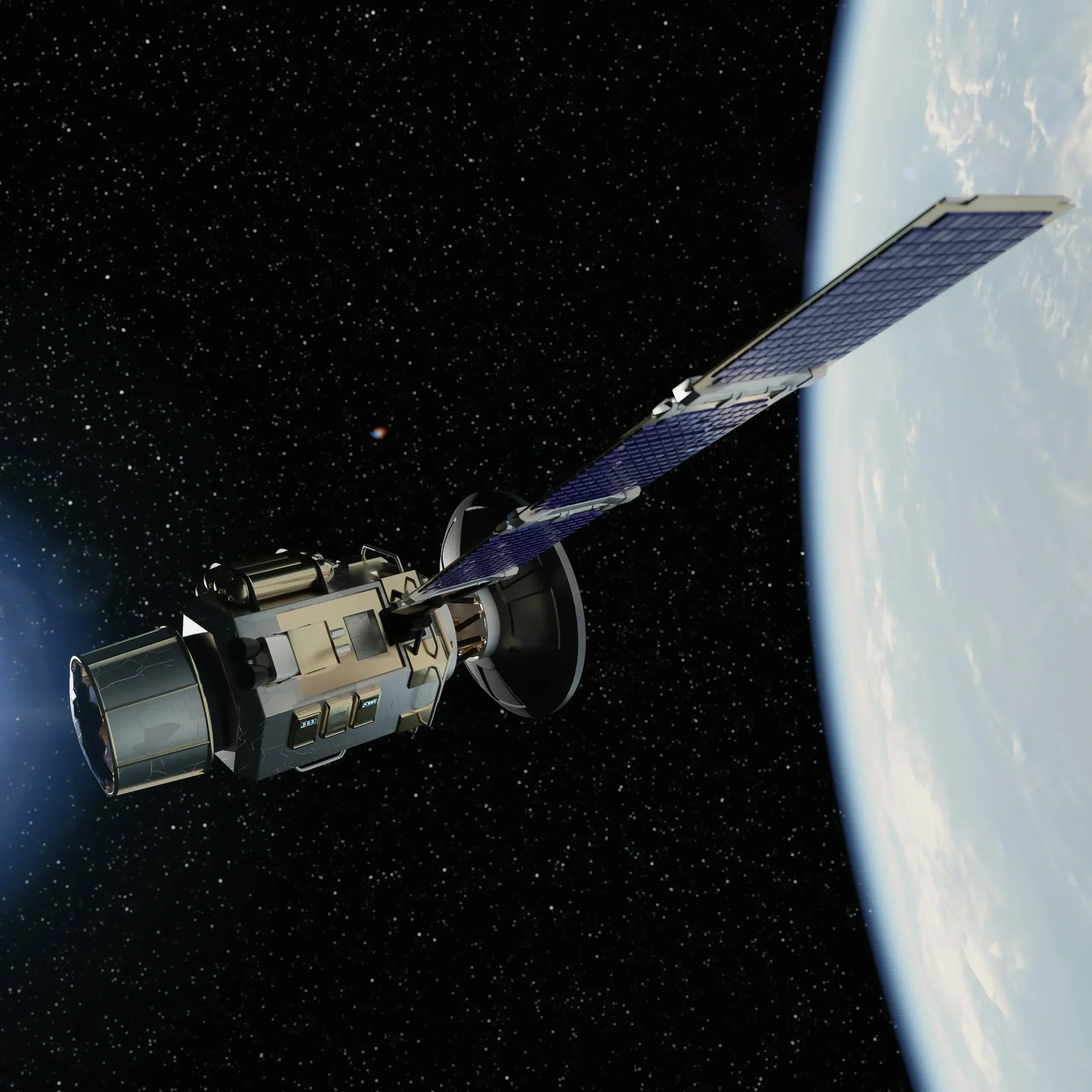
As the commercial space sector accelerates, the demand for Space Grade Cameras has shifted from purely custom, cost-prohibitive legacy systems to high-performance, ruggedized Commercial Off-The-Shelf (COTS) solutions. In the rapidly evolving landscape of Low Earth Orbit (LEO) constellations and deep-space robotics, the optical payload is often the mission’s primary value driver. Whether for Earth observation, satellite docking, or orbital inspection, the camera system must deliver uncompromised image fidelity while surviving the harshest environment known to engineering. KAYA Vision has positioned itself at the forefront of this shift, delivering imaging systems that combine the high bandwidth of modern machine vision with the ruggedization required for aerospace deployment. By bridging the gap between industrial precision and orbital survivability, these cameras allow mission architects to deploy 100+ megapixel sensors and high-speed SWIR imaging without the multi-year lead times of traditional space heritage hardware.
Radiation Tolerant Space Grade Cameras
Designing a radiation tolerant camera for space applications requires a fundamental understanding of how high-energy particles interact with semiconductor materials. In the vacuum of space, cameras are constantly bombarded by protons, heavy ions, and galactic cosmic rays. These particles can cause two primary types of damage: Total Ionizing Dose (TID), which degrades the sensor’s electronics over time, leading to increased dark current and noise; and Single Event Effects (SEE), such as “hot pixels” or latch-ups that can instantly disable a device.
For LEO missions, where the magnetosphere still provides some protection, the industry has moved away from expensive, legacy “rad-hard” sensors (which often lag generations behind in resolution) toward radiation-tolerant COTS architectures. KAYA Vision addresses this by utilizing industrial-grade sensors from Gpixel and Sony for their space grade cameras that feature deep trench isolation and robust pixel designs inherent to modern CMOS technology. These sensors are integrated into camera bodies with carefully selected electronic components that minimize latch-up risks. By employing robust aluminum housings and minimizing the use of radiation-sensitive polymers in the optical path, these cameras maintain image uniformity even after significant orbital exposure. This “NewSpace” approach allows integrators to utilize state-of-the-art Back-Side Illuminated (BSI) and Global Shutter sensors, achieving high quantum efficiency and resolution while managing radiation loads through shielding and system-level redundancy rather than relying solely on archaic sensor technology.
SpaceFibre Space Grade Cameras
Data transmission is the bottleneck of modern space imaging. As sensor resolutions climb past 100 megapixels, the traditional interfaces used in space (like LVDS or Camera Link) become prohibitively heavy and slow. This is where the concept of a SpaceFibre camera—or space grade cameras utilizing high-speed fiber optic interfaces—becomes critical. SpaceFibre (ECSS-E-ST-50-12C) is the next-generation standard for onboard data-handling networks, offering multigigabit bandwidth with a fraction of the mass of copper cabling.
KAYA Vision aligns with this high-bandwidth requirement through its CoaXPress-over-Fiber (CoF) technology. While distinct from the protocol-specific SpaceFibre standard, CoF offers the same physical layer advantages crucial for spaceflight: immunity to Electromagnetic Interference (EMI), galvanic isolation between the payload and the bus, and extremely low cabling mass. In a satellite bus, where every gram costs thousands of dollars to launch, replacing heavy copper coaxial bundles with lightweight fiber optics significantly improves the SWaP-C (Size, Weight, Power, and Cost) profile. KAYA’s implementation allows for data rates up to 40 Gbps (and beyond with multiple links) over distances that easily span the largest launch vehicles or space station modules, ensuring that the massive data generated by high-fidelity sensors reaches the onboard computer without latency or signal degradation.
Vibration Resistant Space Grade Cameras
The launch phase is the most violent 10 minutes in a satellite’s life. A vibration resistant camera must withstand the intense acoustic noise and mechanical shaking of the rocket ascent without optical misalignment or solder joint failure. This requires more than just a strong box; it demands a rigid optical bench design where the sensor and lens mount are thermally and mechanically decoupled from the outer chassis to prevent stress transfer.
KAYA Vision space grade cameras are engineered and tested to MIL-STD-810G standards, the benchmark for military and aerospace ruggedness. Specifically, these units are rated to withstand 75G of shock (Method 516.6) and Category 20 vibration profiles (Method 514.6). This level of resilience ensures that the precise alignment of the sensor—often critical to within microns for high-resolution metrology—remains intact from the launchpad to orbit. Internally, the PCBs are secured to prevent resonant frequency amplification, and connectors (like the micro-BNC or ruggedized fiber options) are selected for their positive-locking mechanisms, preventing cable disconnects during the high-G burn of stage separation. This “launch-ready” build quality eliminates the need for mission integrators to disassemble and reinforce the camera, reducing risk and integration time.
ESA Compliant Cameras
European space missions operate under the rigorous quality and engineering standards of the European Cooperation for Space Standardization (ECSS). While “ESA compliant” is a broad term, sourcing ESA compliant cameras effectively means choosing hardware that adheres to the strict traceability, quality control, and interface standards required by European prime contractors. This often involves compliance with standards like GenICam for software control and specific connector requirements.
KAYA Vision space grade cameras support this ecosystem by adhering to open standards like CoaXPress v2.1 and GenICam, which are widely adopted in the ground support equipment (GSE) and flight hardware of ESA-driven projects. The use of standard protocols ensures that the camera can be easily integrated into complex avionics architectures without proprietary drivers that could jeopardize mission stability. Furthermore, the industrial-grade manufacturing processes used by KAYA—including rigorous burn-in testing, full EMVA1288 reporting for sensor characterization, and wide thermal operating ranges—provide the data packages and reliability assurance that ESA quality assurance managers require for flight readiness reviews. This transparency allows mission planners to simulate exactly how the camera will perform under specific lighting and thermal conditions before it ever leaves the ground.
Long Life Expectancy for LEO
Low Earth Orbit is a unique operational domain. Unlike deep space probes designed for 20 years, LEO satellites typically have mission lifespans of 3 to 7 years. However, a long life expectancy for LEO is still critical to ensure the asset generates revenue or data throughout its entire de-orbit cycle. Premature camera failure can turn a multimillion-dollar satellite into space junk.
Reliability in LEO is defined by the Mean Time Between Failures (MTBF). KAYA Vision utilizes high-grade components to achieve MTBF figures that exceed typical mission durations. For example, specific models in their lineup boast MTBF ratings of over 2,100,000 hours (according to Telcordia standards at 50°C). This exceptional reliability is achieved through fanless thermal designs that eliminate moving parts—which are prone to failure in a vacuum due to lubricant outgassing and bearing seizure. By relying on passive conduction cooling and industrial-grade electronic components rated for extended temperature ranges (typically -40°C to +70°C or +85°C), space grade cameras mitigate the thermal cycling fatigue that often kills electronics as satellites move between the extreme heat of orbital day and the deep freeze of orbital night.